

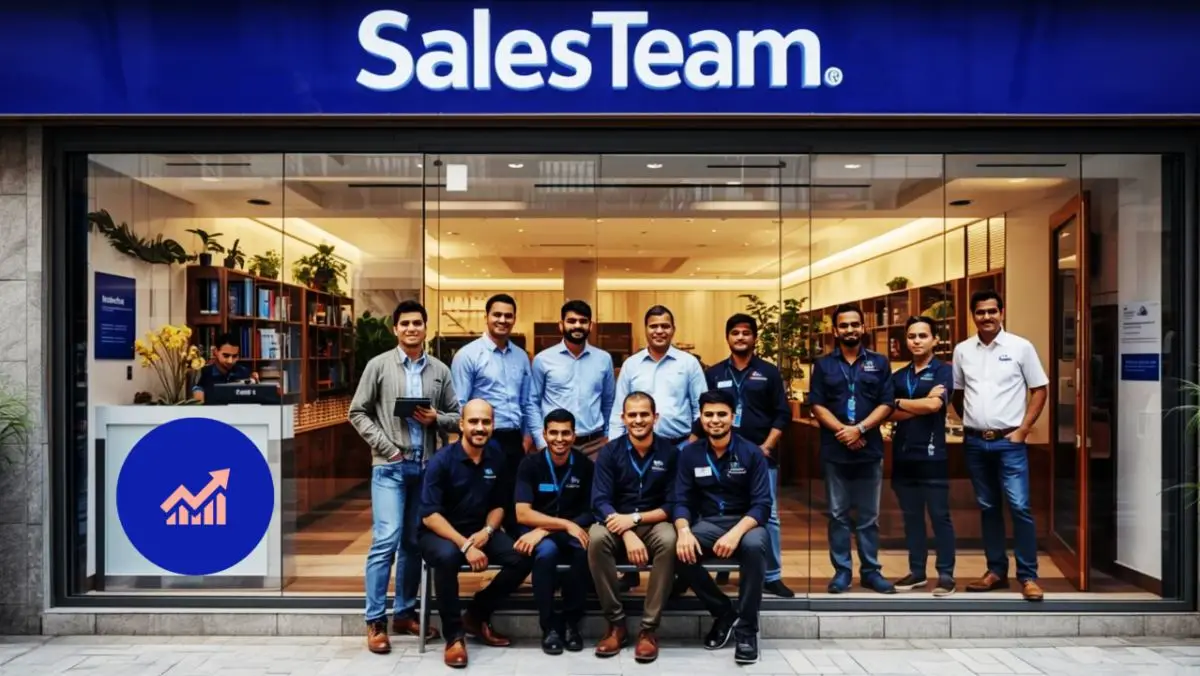
The New Frontline Reality
When I first began working with frontline sales teams across our NBFC network, one truth stood out starkly: the traditional model of customer engagement was breaking down.
Our customers had evolved. They were digitally informed, financially literate, and highly skeptical of aggressive sales pitches. In smaller cities, they valued personal relationships and trust above everything else. Yet, in the pursuit of growth, the pressure to cross-sell often led to transactional behavior — and in some cases, unintentional mis-selling.
For us in Learning & Development (L&D), this created a complex challenge: How do we equip our frontline teams to meet ambitious business goals while strengthening trust and ethical conduct?
This question became the foundation for expanding our Knowledge Transfer Program (KTP) — transforming it from a conventional training initiative into a behavioral and experiential learning ecosystem.
The Vision: From Knowledge to Wisdom
The Knowledge Transfer Program (KTP) was initially designed as a capability-building framework for frontline employees. Over time, however, we realized that knowledge alone wasn’t the differentiator — application and intent were.
Our frontline workforce needed more than product mastery. They needed judgment, empathy, and self-awareness to navigate real-life customer conversations — particularly when multiple product categories were in play.
That insight led to a bold reimagination of the KTP framework, integrating three pillars of next-generation learning:
VR-powered simulations for ethical cross-selling and customer engagement.Behavioral economics workshops to internalize ethical decision-making.Gamified learning models tailored for Tier-2 and Tier-3 city interactions.
This combination created a learning journey that wasn’t just instructional — it was transformative.
1. Reimagining Ethical Cross-Selling Through VR Simulations
One of the most profound shifts we made was the introduction of Virtual Reality (VR) simulations.
In financial services, the nuances of customer interaction — tone, empathy, active listening, ethical persuasion — can make or break trust. VR allowed us to recreate these moments exactly as they happen in branches across the country.
Picture this: a relationship manager in Bhopal dons a VR headset and enters a simulated branch environment. In front of them, a customer avatar discusses a home loan. The RM must recognize subtle emotional cues, ask needs-based questions, and recommend products aligned to the customer’s life goals — not merely sales targets.
In another simulation, the RM faces an ethical dilemma: a short-term incentive could be earned by pushing an unsuitable product. How the learner responds determines their performance score and triggers reflective feedback.
This approach made compliance and ethics come alive. Instead of learning about “do’s and don’ts” from a slide deck, our employees experienced the emotional impact of their choices.
Over time, this immersive methodology reframed the very meaning of “cross-selling.” It became about deepening financial relationships — ensuring each customer engages with 5–7 products that genuinely support their financial well-being.
2. Behavioral Economics: Understanding the Human Mind Behind the Sale
Technology alone wasn’t enough. We needed our people to understand the psychology that drives ethical decision-making.
Enter Behavioral Economics Workshops.
These sessions explored cognitive biases, framing effects, and trust triggers — all within the context of financial conversations. For example, we examined how “anchoring bias” might lead a customer to overvalue high-return products, or how “loss aversion” can make an advisor avoid suggesting equity products even when suitable.
By decoding these mental shortcuts, our teams learned to design customer interactions that were transparent, empathetic, and bias-aware.
We also incorporated practical exercises — “choice architecture” simulations where advisors redesigned their sales dialogues to help customers make informed decisions.
The transformation was visible. Conversations became more consultative, and employees began referring to themselves as financial partners rather than product sellers.
The workshops also created a shared vocabulary for ethics. Instead of top-down compliance instructions, we now had a culture of self-regulation rooted in understanding human behavior.
3. Gamified Learning for Tier-2 City Engagement
Our next frontier was scaling this transformation to Tier-2 and Tier-3 cities, where digital exposure varies and cultural nuances shape customer trust.
Developing leaders who change what happens on Monday
Pathcraft designs leadership programmes, offsites and coaching around a business decision, not a topic.
We deployed a gamified learning platform designed to make skill development accessible, engaging, and socially rewarding.
Branch employees participated in region-specific learning challenges — from micro-quizzes on customer needs to scenario-based roleplays conducted over mobile apps. Leaderboards tracked progress, and teams earned badges for milestones like “Ethical Influencer” or “Customer Trust Champion.”
The results were heartening. Participation rates from Tier-2 locations surpassed metros by 30%, driven by local pride and peer recognition.
Gamification helped normalize learning as part of daily work. It bridged the motivation gap between “training attendance” and “learning application.” And because the platform integrated feedback from customers and supervisors, it reinforced real-world accountability.
4. Tangible Outcomes, Measurable Impact
Transformation is only meaningful when it moves the business needle — and the outcomes from the expanded KTP initiative did just that.
Within a year of implementation across select regions, we saw:
40% uplift in cross-sell ratios, particularly in retail lending and wealth segments.20% revenue growth from branches that had fully completed the program.25% reduction in mis-selling complaints, accompanied by a measurable rise in Net Promoter Scores (NPS).
Behind these metrics lies a deeper story — a shift from transactional selling to trust-based engagement.
Our VR and gamified modules weren’t just training interventions; they became cultural enablers. Advisors now approached every customer interaction as a discovery process, not a pitch. Branch managers began using behavioral insights to coach teams. Even compliance audits started noting “intent alignment” as a success indicator.
5. Lessons in Change and Culture
As an L&D leader, I’ve learned that capability-building programs succeed not because of their content alone, but because of the belief systems they shift.
The expansion of KTP taught us several lessons:
Learning must be experiential to be ethical. Employees internalize values not through lectures, but through lived, simulated experiences.Trust is a behavioral outcome, not a compliance checkbox. When teams understand the psychology of trust, ethical behavior becomes intrinsic.Technology is a mirror, not a replacement for human empathy. VR and gamification work best when they amplify — not replace — the human element of sales.Tier-2 and Tier-3 employees are innovation catalysts. Their adaptability and openness to new formats often outpace metro counterparts.
Most importantly, we discovered that ethics and performance are not competing objectives. When we align them, both flourish.
6. The Human Side of Transformation
Behind every data point lies a human story.
I recall visiting one of our newly trained branches in Nashik. A relationship officer shared how the VR simulation changed her approach with an elderly customer. She realized she had been unconsciously rushing through conversations to meet targets. The simulation forced her to slow down, listen, and ask the right questions.
That single change — rooted in empathy — led to the customer consolidating their accounts and investing in three additional products.
Another story came from an NBFC branch in Raipur. The team gamified their own weekly meetings, using digital leaderboards to celebrate ethical conversations instead of just high-ticket sales. Within two months, their customer satisfaction scores had doubled.
These are not isolated anecdotes. They are reflections of what happens when capability building is anchored in trust and psychology, not pressure and compliance.
7. Building a Future-Ready Frontline
As we look ahead, the question we ask ourselves is no longer “How do we train our people better?” but “How do we help them think differently?”
The next phase of KTP will integrate AI-driven learning personalization — adaptive simulations that evolve based on behavioral data. We are also exploring “digital twins” for customer personas, enabling frontline staff to practice conversations tailored to real-life profiles.
But even as technology advances, our core philosophy remains unchanged:
Learning must begin with the human — not the hardware.
The frontline of the future will be defined by employees who can combine digital fluency with emotional intelligence, who can sell responsibly and build enduring relationships.
And as an L&D leader, I believe our responsibility is not just to enable skills, but to nurture wisdom — the ability to make good choices even when no one is watching.
8. Conclusion: From Compliance to Consciousness
In the banking and NBFC sector, the next wave of competitive advantage will not come from product innovation alone — it will come from human innovation.
The expansion of our Knowledge Transfer Program has shown that immersive learning, behavioral insights, and gamified engagement can transform the very DNA of frontline sales — from transactional to transformational.
When technology becomes a teacher, psychology becomes a compass, and ethics becomes a metric, growth follows naturally.
In the end, this journey isn’t just about cross-selling or reducing complaints. It’s about redefining what it means to be a trusted financial partner in an age where trust itself is the ultimate currency.

Vikram Khanna is the founder of Pathcraft Inc and an HR consultant, facilitator and executive coach with twenty years in HR, organisation development and capability leadership across Solvay, Poonawalla Fincorp and more. He helps founders, CEOs and CHROs fix the systems behind culture and performance.