

There are countless formulas in management literature—strategies to scale, frameworks for performance, models for culture. Yet in decades of working across HR, OD, and L&D, I’ve found one deceptively simple equation that explains more about organisational effectiveness than most leadership handbooks:
Passion + Alignment = Impact.
At first glance, it may look like an elegant slogan for a town-hall slide. But its power lies in the truth it encodes. Passion is the energy individuals bring. Alignment is the compass organisations provide. Impact is what happens when the two converge.
And yet, as leaders, we often privilege one over the other. We over-index on passion as the fuel of creativity, or on alignment as the discipline of execution. Rarely do we acknowledge that neither on its own is enough. Impact—the kind that sustains performance, nurtures culture, and creates meaning—emerges only in the meeting point of both.
This essay is a reflection on why this equation matters now more than ever, what gets in the way, and how leaders—particularly leaders of leaders—must deliberately cultivate this as a capability for the future of work.
The Power of Passion: Fuel Without a Compass
Passion is what makes work more than a transaction. It is the spark that drives a team member to persist through ambiguity, to find solutions when resources are scarce, to care about outcomes beyond their job description. Organisations love to celebrate passion—stories of employees going the extra mile, innovation born out of intrinsic motivation, resilience forged by deep commitment.
But passion is not without risk. Without direction, passion disperses. It becomes energy without coherence. Teams burn bright, but they also burn out. I’ve seen passionate employees who pour themselves into work, only to find their contributions misaligned with organisational priorities. The result? Frustration, fatigue, even cynicism.
I’ve seen high-passion teams that are incredibly busy—innovating, experimenting, producing—but unable to shift organisational outcomes because their efforts are untethered from the strategic compass. Passion, when left to run without alignment, can exhaust more than it enables.
The Role of Alignment: Compass Without Fuel
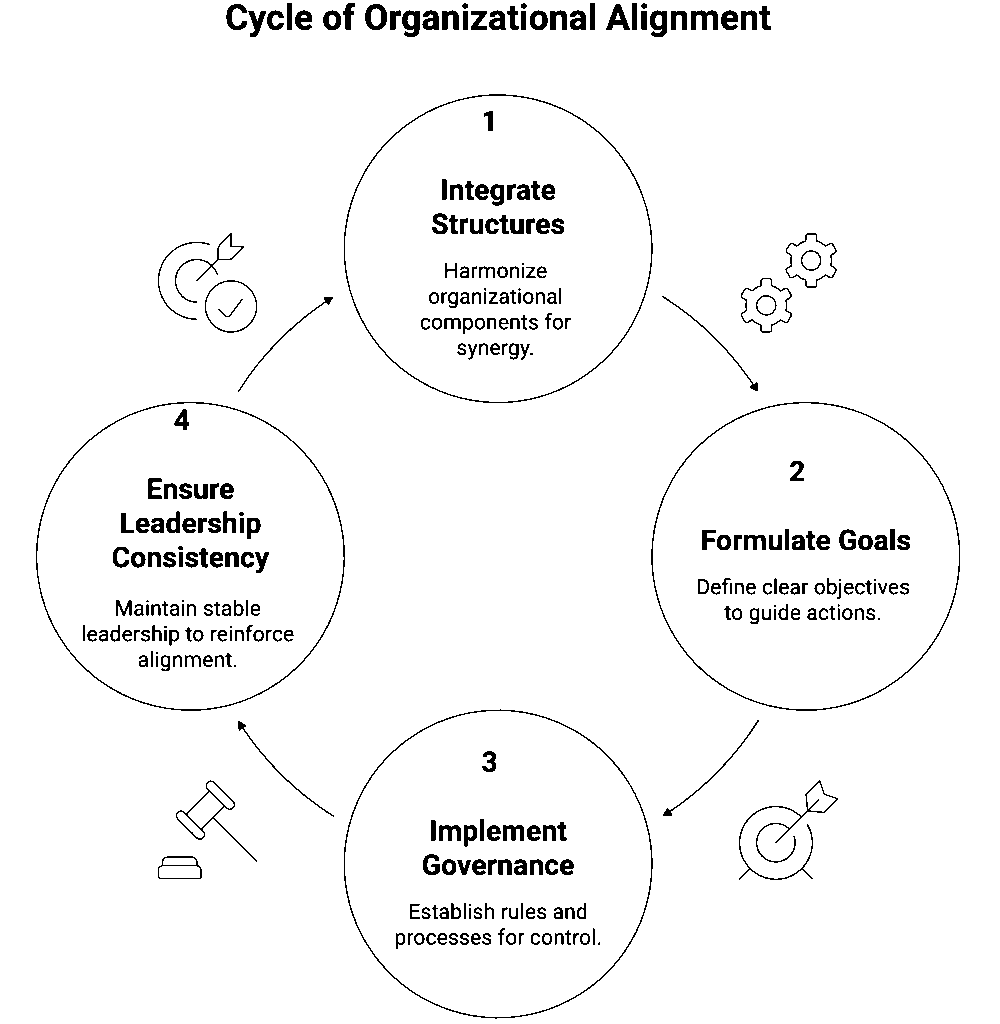
If passion is fuel, alignment is the compass. Alignment translates vision into clarity, strategy into operational direction, and culture into consistent behaviours. It is what ensures teams row in the same direction, not in competing currents. Alignment is built through structures, goals, governance, and leadership consistency.
But alignment on its own can be stifling. Too much emphasis on alignment risks creating organisations that are efficient, but uninspired. Employees tick the boxes, meet the KPIs, and comply with processes—but the spark is absent. Innovation lags. Discretionary effort vanishes. Alignment without passion is the domain of bureaucracies—predictable but stagnant.
We’ve all seen teams where execution is flawless, dashboards are green, and reporting is impeccable—yet something is missing. That missing element is the human energy of passion.
The Convergence: Where Passion Meets Alignment
True organisational impact emerges not from passion alone, nor from alignment alone, but from their intersection. When individuals find that their personal energy resonates with organisational purpose, extraordinary things happen.
Impact, in this sense, is not just about achieving targets. It is about shaping culture, driving innovation, and creating sustainable performance. It is about the synergy between human commitment and organisational direction.
The role of leaders is to design contexts where this convergence is not accidental but intentional. This requires leaders to see themselves not merely as managers of processes or motivators of people, but as architects of ecosystems where passion and alignment amplify each other.
Barriers Leaders Must Acknowledge
Why, if the equation is so simple, do organisations so often miss it? Several barriers stand in the way:
- Misaligned incentives: We often measure what is easy, not what matters. KPIs reward compliance and output but rarely passion-driven innovation.
- Leadership blind spots: Many leaders view alignment as control, rather than as enablement. Passion, meanwhile, is celebrated in rhetoric but unsupported in practice.
- Cultural inertia: Legacy structures, hierarchical silos, and outdated policies stifle passion even in the most committed employees.
- Binary thinking: Organisations swing between passion-focused initiatives (wellness, engagement drives) and alignment-heavy cycles (process reengineering, performance management) instead of integrating both.
Impact erodes when either element is missing or suppressed. Leaders must therefore unlearn the instinct to prioritise one side of the equation and embrace the duality.
What Senior HR, OD, and L&D Leaders Can Do
If the equation is clear, how do we embed it in organisational practice? HR, OD, and L&D leaders sit at the fulcrum of this challenge. Some actions include:
Reframing Talent Strategy Around Purpose-Led Alignment
Move beyond competency frameworks to passion-purpose frameworks. Ask not just “what skills do we need?” but also “what sparks energy in our people?” Build role designs and career architectures that accommodate both functional mastery and personal meaning.
Embedding Learning Journeys That Surface Passion
Create leadership and employee development experiences where individuals articulate their passions and map them to organisational priorities. Use experiential labs, action-learning projects, and coaching to make alignment a two-way conversation rather than a top-down decree.
Fostering Cultures of Dialogue
Passion is surfaced through conversations. Leaders must create safe spaces where people can express what drives them and find resonance with organisational goals. Narrative practices, story-sharing rituals, and cross-functional exchanges can make hidden passions visible and alignable.
Positioning OD and L&D as Equation Architects
These functions must stop being seen as transactional service providers. They must take on the role of architects who build systems where passion and alignment are continuously harmonised: talent systems, governance mechanisms, measurement dashboards, and learning ecosystems that prioritise both energy and direction.
Beyond Engagement: Toward Impact
Traditional HR metrics have long focused on “engagement.” Engagement scores, pulse surveys, and employee satisfaction indices tell us whether people feel good about work. But engagement is only the prelude.
Impact is the performance. Impact is when engagement translates into results that matter—innovation, customer delight, societal contribution, organisational resilience. Engagement without impact risks being indulgent. Impact without engagement risks being extractive.
As senior leaders, we must reframe our lens: the ultimate measure of organisational health is not how engaged employees feel, but how much collective impact is created at the intersection of their passion and organisational alignment.
Leader of Leaders: A Skilling Imperative
Here lies the challenge of our times. Leading individuals is no longer enough. Today’s complexity demands leaders who lead other leaders. And in this “leader of leaders” paradigm, the ability to cultivate the passion-alignment equation is no longer optional—it is a core skill.
Why? Because leaders of leaders are two steps removed from where impact is created. Their influence is mediated through layers. They cannot rely solely on direct inspiration or tight control. Instead, they must ensure that the leaders under them can nurture passion, maintain alignment, and continuously translate both into impact across their ecosystems.
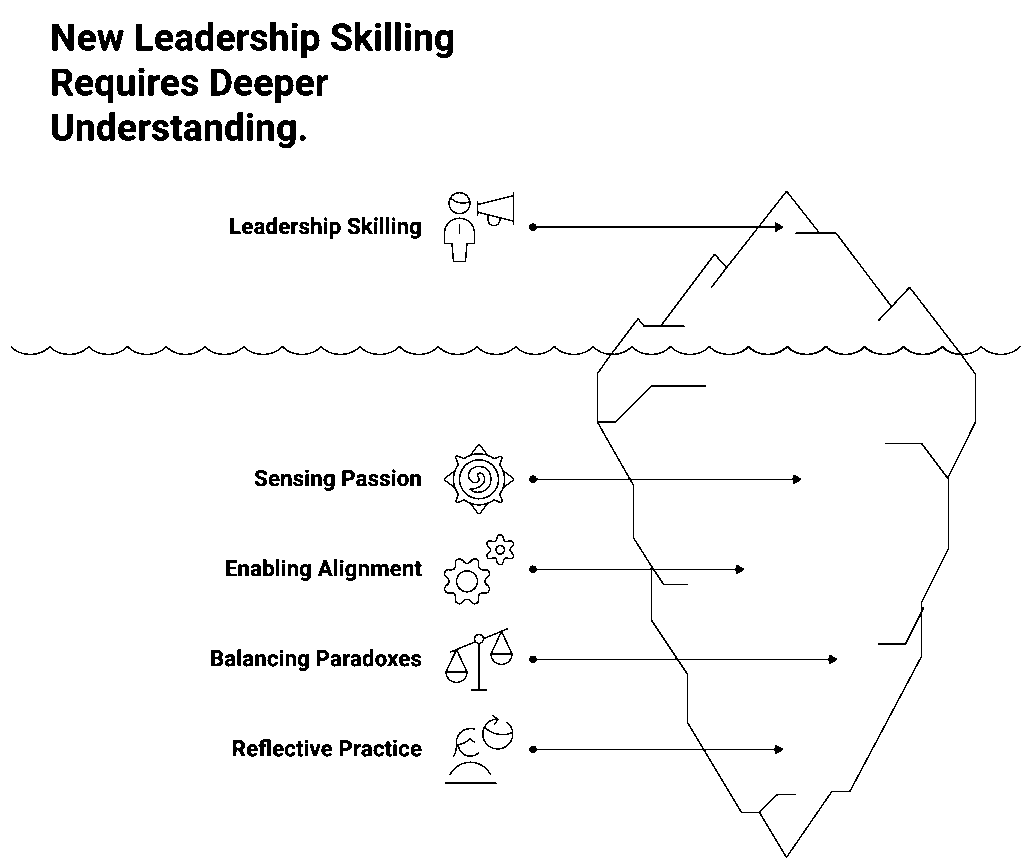
This requires a new kind of leadership skilling:
- Teaching leaders to sense passion in their teams, not just skills or performance—practices that decode motivations, values, and discretionary energy.
- Equipping leaders to align not by imposing, but by enabling—shaping direction in ways that leave space for passion to thrive, through shared narratives, boundary-setting, and principle-led autonomy.
- Coaching leaders to balance paradoxes—freedom and discipline, creativity and consistency, individual meaning and collective purpose—so they can steward dualities rather than resolve them prematurely.
- Embedding reflective practice so leaders of leaders ask: “Am I amplifying both passion and alignment in my system, or am I privileging one at the cost of the other?”
This is where HR, OD, and L&D must invest. Leadership pipelines cannot be built only on functional expertise, decision-making, or execution capacity. They must integrate the ability to orchestrate the passion-alignment equation at scale.
In fact, I would argue that in the next decade, the leaders who succeed will not be those who can merely set direction or inspire energy, but those who can continuously harmonise both—through others, across complex, layered organisations.
Closing Reflection: Leadership as Equation-Building
The more I reflect on my own leadership journey and the leaders I’ve worked with, the clearer it becomes: leadership is less about solving problems and more about solving equations. And the most important equation of all may be this one:
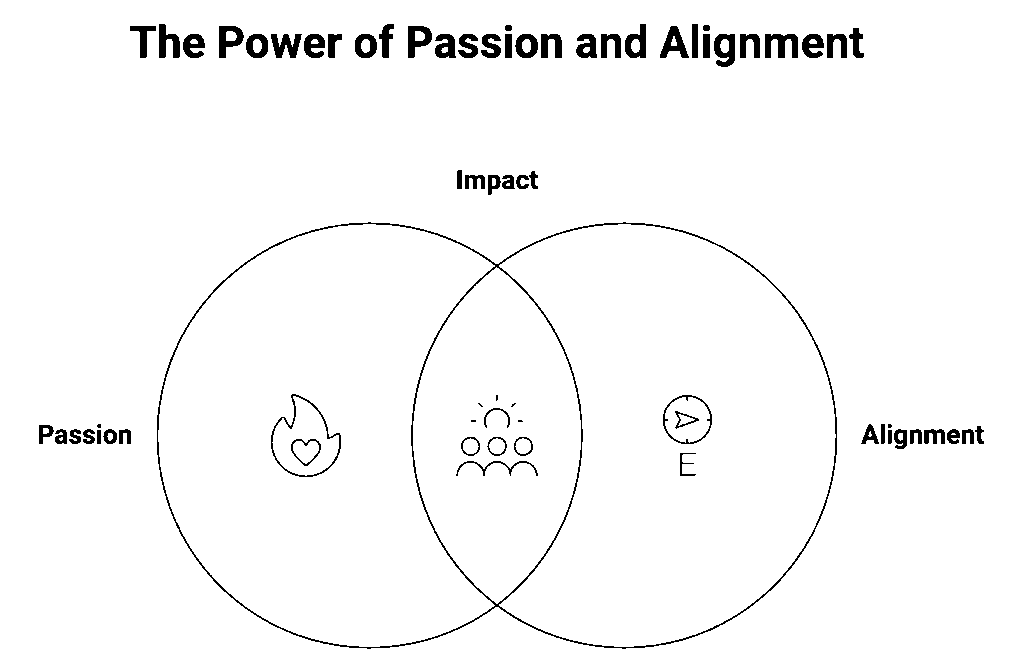
Passion + Alignment = Impact.
Passion without alignment scatters. Alignment without passion stagnates. But when leaders—especially leaders of leaders—learn to nurture both simultaneously, the result is impact that lasts.
The question, then, is not whether we believe in passion or in alignment. The question is: Are we, as leaders, cultivating both—deliberately, consistently, and at scale?
Because in the end, impact is not an accident. It is a choice. It is an equation. And it is the ultimate test of leadership.
If you found this piece useful, you can:
- Share it on LinkedIn to start a conversation with peers and leaders.
- Invite your HR, OD, and L&D teams to use the equation as a framing tool in leadership programs.
© 2025 — Thought Leadership by a senior HR / OD / L&D practitioner. For commissioned or bespoke articles, contact the author.