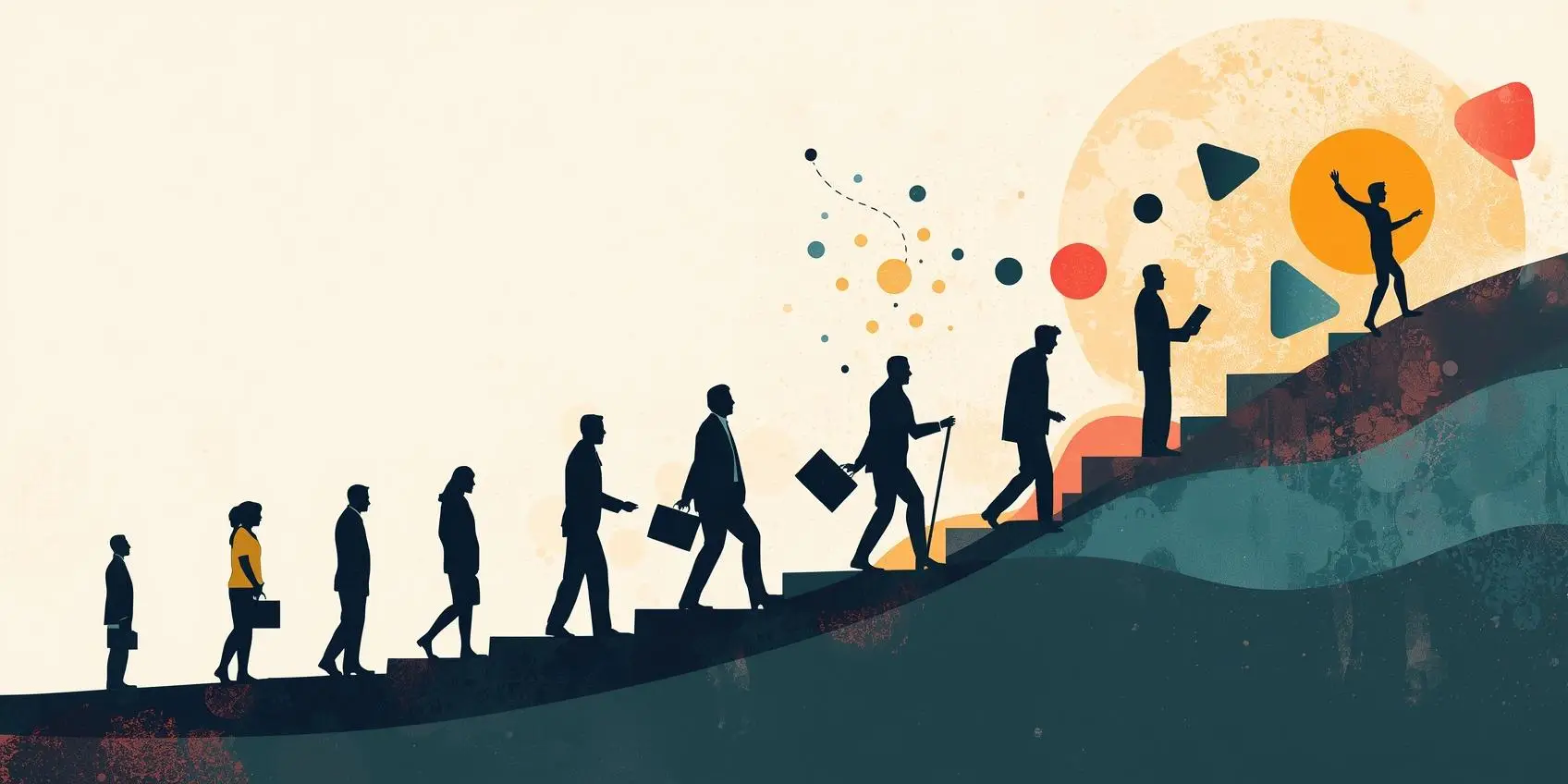

As organizations navigate the ever-changing landscape of the modern workplace, leaders must take a proactive approach to employee development. One effective method of doing so is through Leader-Led Development. This approach places the responsibility of growth and development on the leaders, who in turn, create an environment that fosters growth and learning for their team members.
One model that embodies this approach is the Transformational Leadership model, first introduced by James MacGregor Burns in 1978. Transformational leaders inspire and motivate their followers to achieve their full potential. They create an atmosphere of trust, respect, and empowerment, allowing employees to take on new challenges and grow both personally and professionally.
The benefits of leader-led development are numerous. For one, it helps to build a culture of continuous improvement and learning, which is essential for success in today’s rapidly changing workplace. Additionally, employees who feel supported and empowered are more engaged, motivated, and productive. This leads to higher employee satisfaction and improved retention rates, ultimately contributing to the overall success of the organization.
Leaders who embrace the Transformational Leadership model take an active role in developing their team members, setting clear expectations and providing opportunities for growth. They understand that their role extends beyond simply assigning tasks and responsibilities, but rather to create a work environment that nurtures personal and professional growth.
In times of massive organizational change and uncertainty, leader-led development is critical for several reasons:
Developing leaders who change what happens on Monday
Pathcraft designs leadership programmes, offsites and coaching around a business decision, not a topic.
Adaptability: Leaders play a key role in helping their team members adapt to change and navigate uncertainty. By providing guidance and support, leaders can help their team members develop the skills and capabilities needed to succeed in a rapidly changing environment.Resilience: Leaders can help their team members build resilience by providing opportunities for learning and growth, as well as by creating a positive work environment that fosters collaboration and teamwork. This can help team members to stay motivated and engaged, even in the face of challenges.Alignment: Leaders play a critical role in ensuring that their team is aligned with the organization’s goals and objectives. By leading the development of their team members, leaders can help to build a shared understanding of the organization’s vision and mission, and foster a culture of collaboration and cooperation.Agility: Leaders can help their team members develop the skills and capabilities needed to be more agile, such as problem-solving, decision-making, and innovation. This can help the team to respond quickly and effectively to changing circumstances and to capitalize on new opportunities.Continuous improvement: Leaders can help their team members continuously improve by providing regular feedback and coaching, and by creating opportunities for learning and growth. This can help the team to continually develop their skills and capabilities, even in times of change and uncertainty.
Leadership is about making others better as a result of your presence and making sure that impact lasts in your absence.”
– Sheryl Sandberg
Leader-led capability development models are frameworks and processes used by leaders to develop the skills and competencies of their team members. Some common models include:
70:20:10 model: This model suggests that 70% of learning and development occurs through on-the-job experiences, 20% through relationships with others, and 10% through formal training and education. Leaders who use this model focus on creating opportunities for their team members to gain practical experience and build relationships with others.360-degree feedback: This model involves collecting feedback from multiple sources, including colleagues, managers, and subordinates, to provide a comprehensive view of an individual’s strengths and areas for improvement. Leaders who use this model provide regular feedback and coaching to help their team members develop their skills and capabilities.Action learning: This model involves solving real-life problems as a team, while simultaneously learning and developing new skills and competencies. Leaders who use this model create opportunities for their team members to work on challenging projects and provide support and guidance as they develop their skills.Mentoring: This model involves pairing a more experienced individual with a less experienced one to provide guidance and support as the latter grows in their role. Leaders who use this model serve as mentors to their team members, helping them develop their skills and capabilities over time.Blended learning: This model combines formal training, on-the-job experience, and feedback from others to create a comprehensive learning and development program. Leaders who use this model provide a variety of learning opportunities to their team members, including classroom training, workshops, and hands-on experience.
In conclusion, Leadership-Led Development is a crucial component of success in today’s workplace. By embracing models such as Leader-led development, leaders can create a positive and supportive environment that fosters growth and learning, leading to a more motivated, productive, and engaged workforce.

Vikram Khanna is the founder of Pathcraft Inc and an HR consultant, facilitator and executive coach with twenty years in HR, organisation development and capability leadership across Solvay, Poonawalla Fincorp and more. He helps founders, CEOs and CHROs fix the systems behind culture and performance.