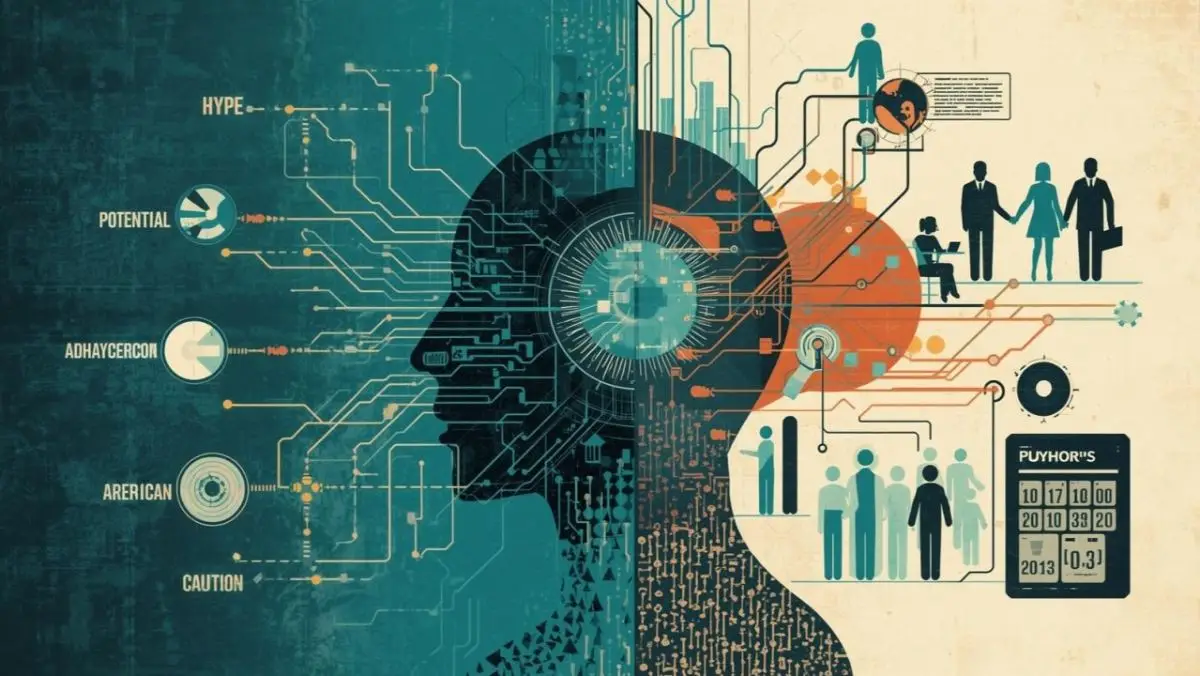

In the past few years, “AI in HR” has become a phrase so overused that it risks losing its meaning. Yet beneath the noise lies something far more nuanced — an ecosystem of intelligent technologies reshaping how organisations attract, engage, and develop their people.
The problem is, most conversations still treat AI as a single entity — a monolithic technology that magically “automates HR.” The truth is more layered. Artificial Intelligence has multiple subsets, each designed for distinct purposes, influencing HR in very different ways. To use AI effectively, HR leaders must understand which kind of intelligence they are integrating — and why.
Generative AI – from content to context
Generative AI has become the most visible face of this revolution. Tools like ChatGPT, Copilot, and Perplexity are already helping HR practitioners craft job descriptions, generate personalised outreach messages, and create learning content at scale. But the true potential of generative AI lies not in faster writing — it’s in better thinking.
When used responsibly, generative models can analyse complex datasets and surface insights that help with strategic workforce planning. They can simulate talent demand, create predictive workforce scenarios, and even draft learning pathways for emerging roles. However, these systems are only as good as their human curators. Without clear ethical oversight, they risk amplifying bias, hallucinating insights, or diluting the authentic tone of employer communication.
Conversational AI – redefining HR accessibility
The second layer of AI in HR is conversational AI — the use of Natural Language Processing (NLP) to power virtual HR assistants and chatbots. These systems are not just “digital FAQs.” They represent a new interface for employee experience.
Today, AI assistants can guide employees through benefits enrolment, interpret HR policies, or recommend learning resources — all in real time, 24/7. When integrated well, they make HR feel more human by being more available. When designed poorly, they create digital distance.
As organisations scale, conversational AI bridges a critical gap: speed with empathy. Employees want immediacy without losing connection — and that balance will define the next generation of HR service models.
AI voice technology – humanising automation
Emerging voice-based systems like Grace are adding a new dimension to HR support. Voice AI provides accessibility to employees who prefer speaking over typing, enabling inclusive interaction across languages and literacy levels.
Voice-enabled HR agents can handle inquiries, provide guidance, and escalate complex issues to live HR partners. This evolution matters in markets like India, where workforce diversity includes multilingual, multi-regional employees. Voice AI doesn’t replace empathy; it scales it.
Machine Learning – from prediction to prevention
Machine learning (ML) has quietly become the analytical backbone of HR. Its value lies in pattern recognition and prediction — identifying which employees are likely to leave, which candidates are most compatible with certain roles, or how compensation trends influence retention.
Supervised learning models, trained with labelled data, help HR predict outcomes like flight risk or hiring fit. Unsupervised models, on the other hand, uncover hidden clusters — for example, why certain teams consistently outperform others or why turnover spikes in specific functions.
For HR leaders, ML is less about automation and more about decision intelligence — converting raw data into strategic foresight.
Building capability for the AI era?
Pathcraft helps leadership teams design learning strategies and academies tied to the KPIs that matter.
Natural Language Processing – listening at scale
If engagement surveys tell you what employees say, NLP helps decode how they feel. By analysing open-text responses, social posts, and performance feedback, NLP tools identify sentiment trends, emerging issues, and emotional drivers across the workforce.
When paired with human interpretation, these insights enable proactive interventions — addressing morale dips before they turn into attrition. In the age of hybrid work, NLP becomes the digital stethoscope of organisational culture.
Automation AI – building the efficiency spine
While the world celebrates innovation, the less glamorous side of AI — automation — continues to create tangible impact. Automating repetitive HR processes such as payroll, résumé screening, and compliance tracking not only reduces errors but reclaims strategic bandwidth.
Automation AI is the foundation upon which the more advanced subsets of intelligence can operate. Without reliable, automated systems, predictive and generative tools rest on shaky ground.
AI agents – the next frontier
Perhaps the most transformative evolution in HR tech is the rise of AI agents — autonomous systems capable of making decisions and taking actions without constant human intervention.
Imagine an AI agent that proactively monitors employee performance data, recommends career development programmes, or schedules learning sessions aligned to future skill gaps. These agents don’t just respond; they anticipate.
In mature HR ecosystems, AI agents could become co-managers, guiding new hires through onboarding, nudging leaders on engagement behaviours, and aligning learning goals to organisational priorities. The promise is profound — but so are the ethical considerations.
The convergence: designing for augmentation, not automation
Each subset of AI plays a role, but the real transformation happens when they converge. Imagine a system where NLP interprets employee sentiment, ML predicts potential risk, Generative AI creates personalised learning paths, and AI agents nudge employees into action. That’s not the future — it’s unfolding now.
However, this convergence demands restraint and reflection. The goal is not to replace HR professionals, but to amplify their strategic capacity. AI can process data; it cannot discern meaning. It can generate content; it cannot generate context.
The defining capability of HR leaders in this decade will not be learning to use AI tools, it will be learning to ask better questions of them.
Intent Amplification is the key
AI’s role in HR is not to humanise technology, but to technologise humanity, to scale empathy, insight, and inclusion through systems that learn responsibly.
The danger lies not in automation itself, but in the unquestioned trust we place in it. As stewards of people and culture, HR leaders must ensure that every algorithm that accelerates efficiency also safeguards fairness, dignity, and meaning.
AI is not a substitute for wisdom, it is an amplifier of intent. And our intent, as always, must remain deeply human.

Vikram Khanna is the founder of Pathcraft Inc and an HR consultant, facilitator and executive coach with twenty years in HR, organisation development and capability leadership across Solvay, Poonawalla Fincorp and more. He helps founders, CEOs and CHROs fix the systems behind culture and performance.